Navigating the world of forklift regulations can often feel like steering through a maze. As an essential component of warehouse and construction operations, understanding these rules is crucial for maintaining safety and compliance. In the UK, the framework governing forklift use is designed to protect workers and ensure smooth operations, but it can be complex.
This guide simplifies UK forklift regulations, covering essential requirements for operator training, maintenance, safety, and compliance. Whether you manage a warehouse or construction site, you will gain practical insights to help navigate regulations, protect employees, and maintain a safer, more efficient workplace.
Understanding Forklift Regulations in the UK
Forklift regulations in the UK are primarily focused on safety, helping to minimise risks and create a safer working environment. They cover areas including equipment suitability, maintenance, inspections and operator training. Understanding these requirements is essential for businesses and anyone responsible for forklift operations.
The Health and Safety at Work Act 1974 provides the foundation for UK workplace safety law, setting out duties for employers and employees. For forklift operations, the Provision and Use of Work Equipment Regulations 1998 (PUWER) and Lifting Operations and Lifting Equipment Regulations 1998 (LOLER) are particularly important. These regulations require equipment to be suitable, properly maintained, regularly inspected, and safely operated by trained personnel.
While forklift regulations can seem complex, compliance is essential for protecting employees and avoiding legal consequences. Following the relevant legislation helps businesses reduce accidents, maintain efficient operations, and ensure everyone can work safely.
Importance of Compliance for Forklift Operations
Compliance with forklift regulations is not just a legal obligation; it is essential for maintaining workplace safety. Failing to follow these regulations can lead to accidents, injuries, and fatalities, resulting in significant human and financial costs. Ensuring compliance reduces the risk of accidents, minimises downtime and supports greater productivity.
Non-compliance can also result in substantial financial penalties. The Health and Safety Executive (HSE) can impose fines and other penalties on businesses that fail to meet safety requirements, with serious breaches potentially leading to legal action. Beyond these costs, non-compliance can damage a company’s reputation and make it harder to attract and retain clients and employees.
Following forklift regulations also helps create a strong culture of safety. When employees see that safety is taken seriously, they are more likely to follow procedures and recognise potential risks. This proactive approach protects employees while helping businesses maintain safer, more efficient operations.
Key Legislation Governing Forklift Use
Several key pieces of legislation govern forklift use in the UK, helping protect workers and ensure equipment is used safely.
The Health and Safety at Work Act 1974 provides the foundation for workplace safety. It requires employers to protect the health, safety, and welfare of employees, including providing suitable equipment and ensuring forklifts are used correctly.
The Provision and Use of Work Equipment Regulations 1998 (PUWER) requires forklifts to be suitable for their intended use, properly maintained, regularly inspected, and operated by adequately trained employees.
The Lifting Operations and Lifting Equipment Regulations 1998 (LOLER) focuses on lifting equipment and operations. It requires equipment to be strong and stable, clearly marked with safe working loads, and used in carefully planned and supervised lifting operations.
Together, these regulations provide a framework for ensuring forklifts are safe, properly maintained and operated by competent personnel.
Health and Safety Executive (HSE) Guidelines
The Health and Safety Executive (HSE) provides detailed guidance on the safe use of forklifts, helping employers and operators understand their responsibilities around training, maintenance, and safe operation. Following this guidance helps businesses meet regulatory requirements and create a safer working environment.
Operator training is a key focus. The HSE emphasises that forklift operators should receive appropriate initial training, with refresher training and regular competency assessments where required. A recognised provider should deliver training to ensure operators have the skills needed to use forklifts safely and effectively.
The HSE also highlights the importance of regular maintenance and inspections. Forklifts should be checked before use, with any defects reported and repaired promptly. Thorough inspections should also be conducted by a competent person at appropriate intervals to ensure equipment remains safe and reliable.
Following HSE guidance can help businesses reduce the risk of accidents, protect employees, and maintain safe, compliant forklift operations.
Training and Certification Requirements for Operators
Proper training is essential for safe forklift operation. In the UK, the Health and Safety Executive (HSE) recommends comprehensive training covering both the theoretical and practical aspects of forklift use. Training should be delivered by a recognised provider and include classroom instruction alongside hands-on practice.
Key areas should include safe load handling, lifting, and placing loads, understanding the different forklifts available, forklift controls and features, and operating safely in the workplace. Practical training allows operators to develop their skills under the supervision of a qualified instructor before operating independently.
Operators should be assessed to confirm they are competent to use a forklift safely. Assessment typically covers both knowledge and practical skills, with successful operators receiving evidence of their training and competence.
Refresher training should also be provided, when necessary, particularly where an operator’s performance indicates it is needed, working conditions change, or a different type of forklift is introduced. Keeping operator skills and knowledge up to date is an important part of maintaining safe and compliant forklift operations.
Regular Inspections and Maintenance Protocols
Regular inspections and maintenance are essential for keeping forklifts safe, reliable and efficient. The Health and Safety Executive (HSE) recommends daily pre-use checks alongside more thorough periodic inspections to identify potential defects and reduce the risk of accidents.
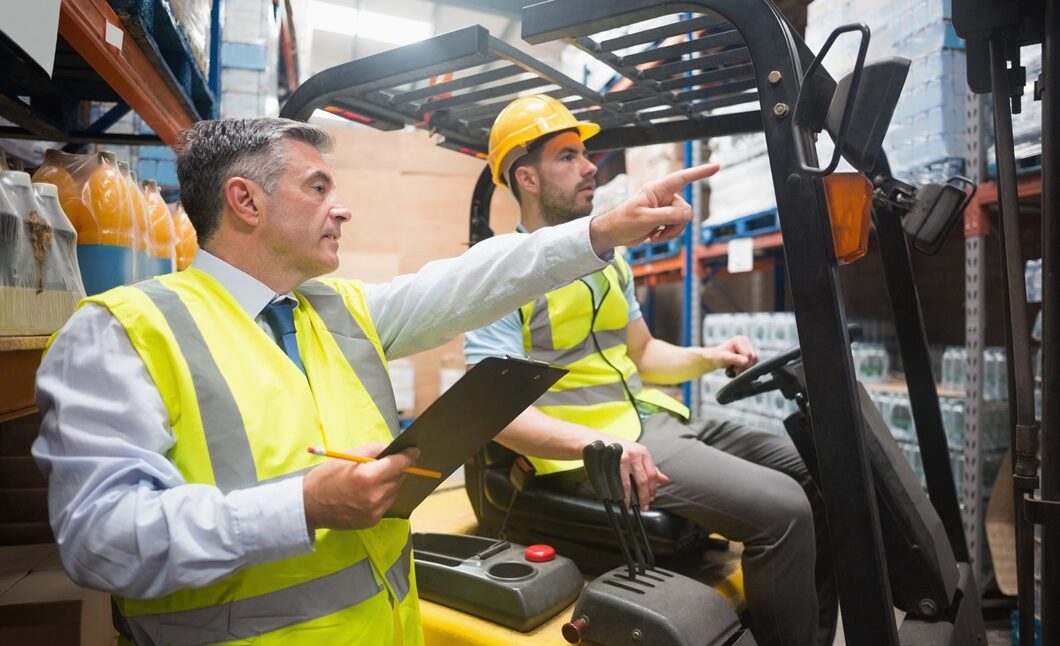
Before operating a forklift, drivers should carry out a visual inspection, checking key areas such as tyres, forks, lights, warning devices, fluid levels and signs of leaks or damage. Any defects should be reported immediately and addressed before the forklift is used.
More detailed inspections should be completed by a competent person at appropriate intervals, based on factors such as the forklift’s age, condition, and frequency of use. These checks should cover critical components including the lifting mechanism, brakes, steering, and electrical systems.
Routine maintenance should also follow the manufacturer’s recommendations, including servicing, oil changes, and filter replacements where applicable. Keeping accurate maintenance and inspection records can help demonstrate compliance and ensure issues are identified and resolved promptly.
A proactive approach to forklift maintenance helps businesses protect operators, minimise downtime and keep equipment performing safely.
Risk Assessment and Safety Measures
A thorough risk assessment is essential for ensuring the safe operation of forklifts, whether they are new, used, or refurbished. The Health and Safety Executive (HSE) recommends identifying workplace hazards, assessing the level of risk, and putting suitable control measures in place. These assessments should reflect the specific conditions of the workplace and include input from both management and employees.
Common forklift hazards include uneven or slippery surfaces, narrow aisles, poor visibility, and interactions with pedestrians. Businesses should consider both the likelihood of an incident occurring and the potential severity of the outcome, helping them prioritise the most significant risks.
When operating used or refurbished forklift trucks, it is especially important to ensure that all equipment is thoroughly inspected, maintained, and suitable for the working environment. Appropriate control measures may include pedestrian barriers, improved lighting, clearly marked walkways, and keeping floors free from obstructions.
Safe working procedures and employee training are also important, while PPE such as high-visibility clothing and safety footwear can provide additional protection. Regularly reviewing risk assessments helps ensure that control measures remain effective as workplace conditions change.
By taking a proactive approach to risk management, businesses can reduce forklift-related accidents and create a safer working environment.
Common Compliance Pitfalls to Avoid
Despite best intentions, businesses can sometimes fall short of forklift regulations. Understanding common compliance pitfalls can help prevent issues and support a safer working environment across different sites and depots.
Inadequate operator training is a widespread problem. Without appropriate training and refresher courses, operators may lack the knowledge and skills needed to use forklifts safely. Businesses should ensure all operators are professionally trained and that their competence is maintained over time.
Neglecting inspections and maintenance can also create significant risks. Daily pre-use checks and periodic thorough inspections are essential for identifying defects before they cause accidents. A documented maintenance programme helps ensure issues are addressed promptly and equipment remains safe to use.
Poor risk management is another common pitfall. Businesses should conduct thorough risk assessments, implement suitable control measures, and review them regularly. Workplace conditions can vary between locations, so assessments should be tailored to each site and updated whenever necessary.
For businesses operating in multiple areas, it can be useful to work with a local forklift provider that understands site-specific requirements. Whether you require support in Manchester or Liverpool, choosing the right partner to purchase or hire your forklifts from, inspections, maintenance, and ongoing compliance.
By addressing these areas proactively, businesses can reduce risks, improve compliance, and create a safer environment for forklift operators and other employees.
Resources for Staying Updated on Regulations
Keeping up to date with forklift regulations and best practices is essential for maintaining compliance and workplace safety. The Health and Safety Executive (HSE) is a key resource, providing guidance, codes of practice and updates on regulatory changes. Businesses can also subscribe to HSE alerts and newsletters to stay informed.
Industry organisations such as the British Industrial Truck Association (BITA) and Fork Lift Truck Association (FLTA) offer valuable guidance, training, and certification programmes, alongside updates on industry developments and regulations.
Businesses can also collaborate with specialist forklift safety consultants and training providers. These professionals can provide expert advice, operator training, assessments, and support with developing effective safety procedures.
Using these resources helps businesses stay informed about regulatory changes, maintain compliance, and promote safer forklift operations.
Ensuring Safe and Compliant Forklift Operations
Safe and compliant forklift operations require a strong understanding of regulations, ongoing training, regular maintenance, and effective risk management. By following HSE guidance, conducting regular risk assessments, and keeping up to date with regulations, businesses can reduce accidents, protect employees, and avoid costly fines.
Forklift compliance is more than a legal requirement – it supports a safer, more efficient workplace. Businesses can also benefit from working with experienced forklift specialists for their equipment needs. At Premier Lift Trucks,we provide forklifts for sale and hire, as well as servicing and repairs, helping businesses keep their equipment safe, reliable, and compliant.
Taking a proactive approach to training, maintenance, and safety allows businesses to operate confidently while fostering a strong culture of workplace safety.