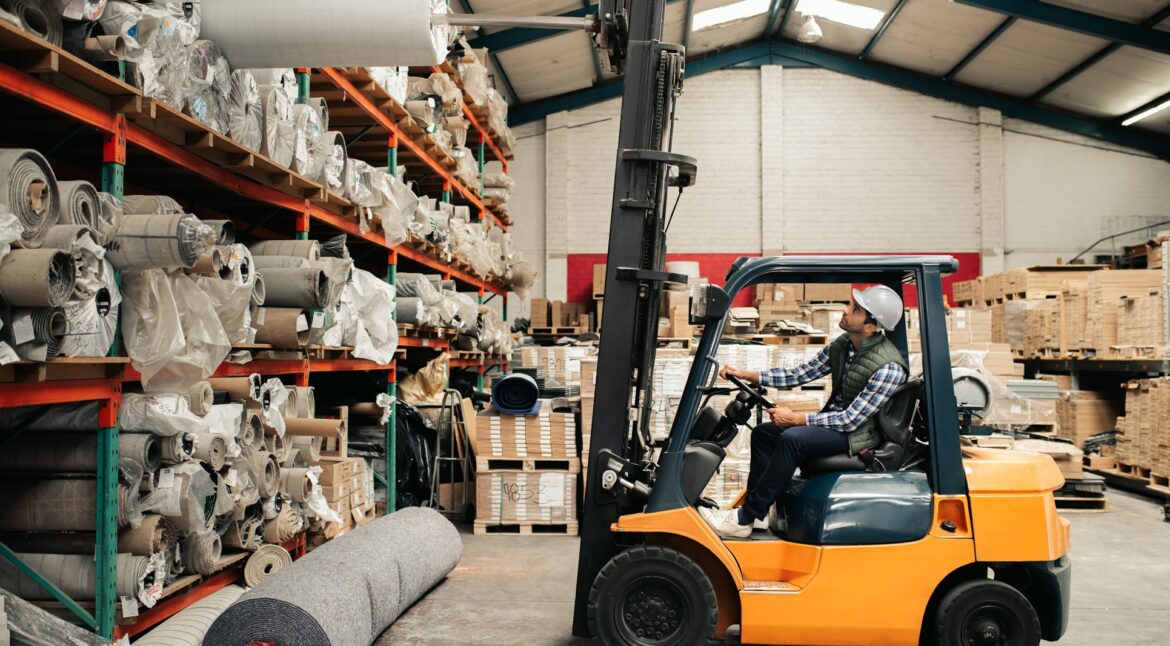
Forklift load capacity is a critical specification that indicates the maximum weight a forklift can safely lift and transport. This capacity is primarily determined by the forklift’s design, including its engine power, mast height, and fork configuration. Each forklift model comes with a specific load capacity that is clearly marked on a data plate, which should never be exceeded to ensure safe operation. Understanding load capacity is not just a matter of compliance with safety standards but is also crucial for maintaining operational efficiency and minimising risks of equipment damage or accidents.
The concept of load capacity extends beyond just the weight that a forklift can lift. It also involves understanding the load’s centre of gravity and how it affects the forklift’s stability. A forklift’s capacity is calculated with a standard load centre, which is typically 24 inches from the face of the forks to the centre of gravity of the load. If the actual load’s centre of gravity is further away, the effective load capacity of the forklift is reduced. This makes it essential for operators to recognise how different load configurations can impact overall capacity.
Moreover, forklift load capacity is not static and can be influenced by several dynamic factors. For example, attachments like side shifters or rotators can alter the forklift’s load capacity by changing the load’s centre of gravity and adding additional weight. Therefore, it’s vital for operators to be aware of how these factors interplay with the forklift’s rated capacity and adjust their operations accordingly. Failure to understand and correctly apply load capacity can lead to accidents, including tip-overs, which are among the most common and dangerous forklift incidents.
Importance of Understanding Load Capacity
Understanding forklift load capacity is paramount for several reasons, safety and efficiency. When operators are aware of the maximum weight their equipment can manage, they can prevent overloading, which significantly reduces the risk of accidents. Overloaded forklifts are prone to tipping, losing loads, or causing structural damage to racking systems, all of which pose significant safety hazards in a workplace environment.
Beyond safety, understanding load capacity is essential for maintaining the longevity of the forklift. Overloading can lead to excessive wear and tear on the forklift’s components, such as the hydraulic system, forks, and tyres. This not only increases maintenance costs but also results in more frequent downtime, impacting productivity. By adhering to the specified load limits, operators can ensure the forklift remains in optimal working condition, thus extending its operational life and preserving the investment.
Furthermore, knowledge of load capacity is crucial for complying with legal and regulatory standards. Occupational safety regulations often require that operators be properly trained and capable of accurately assessing load capacities to prevent workplace accidents. By understanding and applying these principles, businesses can avoid costly fines and penalties associated with non-compliance. Moreover, this knowledge fosters a culture of safety and responsibility among employees, promoting a safer and more efficient working environment.
Types of Forklifts and Their Load Capacities
Forklifts come in various types, each designed to serve specific functions and handle different load capacities. The most common type is the counterbalance forklift, which is widely used in warehouses and construction sites. These forklifts have a counterweight at the back to balance the load at the front, allowing them to lift between 1,800 to over 4,500 kilograms, depending on the model and configuration. Their versatility makes them suitable for a wide range of applications.
Reach trucks are another popular type of forklift, primarily used in narrow aisle environments. They are designed with extendable forks that can reach into racking systems, making them ideal for high-density storage. However, their load capacity is typically lower than counterbalance forklifts, ranging from 1,000 to 2,500 kilograms. The reduced capacity is due to their design, which prioritises reach and manoeuvrability overweight capacity.
Rough terrain forklifts are built for outdoor use on uneven surfaces. They have robust tyres and powerful engines to handle rugged conditions. These forklifts can manage heavier loads, often exceeding 4,500 kilograms, making them suitable for construction sites and lumber yards. Additionally, there are specialised forklifts like side loaders and articulated forklifts, each with unique configurations and capacities tailored to specific tasks. Understanding the capabilities of each forklift type is essential for selecting the right equipment for the job and ensuring safe load handling.
Factors Affecting Forklift Load Capacity
Several factors can affect a forklift’s load capacity, beyond its basic design and specifications. One significant factor is the load centre distance, which is the distance from the vertical face of the fork to the load’s centre of gravity. As this distance increases, the load capacity decreases because the load exerts greater leverage on the forklift. Operators need to be aware of how load placement can impact capacity, particularly when handling oversized or unusually shaped items.
Another critical factor is the lift height. As the forks are raised, the forklift’s stability decreases, which can reduce its effective load capacity. This is because a higher load centre of gravity makes the forklift more prone to tipping. Manufacturers often provide load capacity charts that indicate how capacity decreases as lift height increases, and these charts should be consulted before lifting loads to significant heights.
Attachments are also a key consideration in determining load capacity. Forklift attachments, such as clamps, rotators, and forks extensions, can significantly change a forklift’s centre of gravity and add additional weight. This impacts the overall load capacity, sometimes reducing it by up to 50%. Operators must account for attachment weight and altered load centres when calculating the maximum safe load. Regular review of the forklift’s data plate, which should be updated to reflect the use of any attachments, is essential for safe operation.
How to Calculate Load Capacity
Calculating load capacity is a critical task that requires understanding both the forklift specifications and the properties of the load itself. The first step in calculating load capacity involves consulting the forklift’s data plate, which provides the maximum load capacity for a given load centre. This plate offers essential information but assumes a standard load centre distance, typically 24 inches for most counterbalance forklifts. If the load’s centre of gravity is different, adjustments need to be made.
To calculate the effective load capacity, operators must consider the actual load centre distance. The formula used is: (Rated Load Capacity × Rated Load Centre) ÷ Actual Load Centre. This calculation accounts for shifts in the load’s centre of gravity, ensuring that the forklift can handle the load safely. Additionally, operators should factor in the weight of any attachments, as these can alter the forklift’s balance and effective capacity.
Understanding how to interpret and apply load charts is also vital. These charts provide detailed information on how load capacity changes with variations in lift height and load centre distance. By familiarising themselves with these charts, operators can make informed decisions when handling loads that are near the forklift’s maximum capacity. This knowledge is critical for preventing overloading and ensuring that operations remain within safe parameters.
Safe Load Management Practices
Implementing safe load management practices is essential for preventing accidents and ensuring efficient operations. One of the most important practices is to ensure that loads are evenly distributed on the forks. Uneven loads can shift the centre of gravity, increasing the risk of tipping. Operators should make it a habit to inspect loads before lifting, redistributing weight as necessary to maintain balance and stability.
Whether you hire the forklift or own it, regularly inspecting the forklift and its components is another key practice. Operators should check for signs of wear and tear, such as cracks in the forks or leaks in the hydraulic system, which can affect load handling capabilities. Ensuring that tyres are properly inflated and in good condition is also critical, as they play a significant role in maintaining stability and traction.
Communication and training are fundamental components of safe load management. Operators should be trained to recognise the signs of overloading and understand the importance of adhering to load capacity limits. Encouraging open communication between team members allows for the sharing of insights and experiences that can enhance safety practices. By fostering a culture of safety, organisations can minimise risks and promote a more productive work environment.
Common Misconceptions about Forklift Load Capacity
Despite the importance of understanding forklift load capacity, several misconceptions persist, which can lead to unsafe practices. One common misconception is that a forklift can always lift its rated capacity, regardless of other factors. In reality, the rated capacity is based on a specific load centre and lift height. Any deviation from these conditions can reduce the effective capacity, making it crucial for operators to assess each load individually.
Another misconception is that attachments do not significantly impact load capacity. Many operators underestimate how much attachments can alter a forklift’s balance and centre of gravity. Attachments add extra weight and can change how the load is distributed, which often results in a reduced load capacity. Awareness of how attachments affect capacity is essential for safe operation.
Some believe that if a forklift can physically lift a load, it is safe to do so. This is a dangerous assumption, as the ability to lift a load does not guarantee stability or control. Forklifts are engineered with specific parameters to ensure safe operation, and exceeding these limits can lead to accidents. Educating operators on the realities of load capacity and the importance of adhering to specifications is vital for preventing accidents and ensuring workplace safety.
Regulatory Standards and Compliance
Regulatory standards play a crucial role in ensuring forklift safety and load capacity management. In many regions, organisations such as the Occupational Safety and Health Administration (OSHA) in the United States and the Health and Safety Executive (HSE) in the UK set guidelines and regulations for forklift operation. These standards mandate that forklifts be operated within their rated load capacities and that operators be properly trained and certified.
Compliance with these regulations is not just a legal obligation but also a cornerstone of workplace safety. Failure to adhere to standards can result in severe penalties, including fines and shutdowns. More importantly, it can lead to accidents with potentially fatal outcomes. Regular audits and inspections are essential to ensure that all forklifts are in compliance with regulatory requirements and that operators are following safe practices.
Regulatory standards also require that data plates on forklifts be kept up to date, reflecting any modifications or attachments that might affect load capacity. Ensuring that these plates are accurate and legible is a critical aspect of compliance. By prioritising adherence to regulatory standards, companies can foster a safer workplace and avoid the legal and financial repercussions of non-compliance.
Training and Certification for Forklift Operators
Training and certification are fundamental components of effective load capacity management and overall forklift safety. Proper training equips operators with the knowledge and skills necessary to assess load capacities accurately and handle loads safely. Certification programmes typically cover a range of topics, including understanding load charts, recognising the impact of load centres, and safely utilising attachments.
Certification is not just a one-time requirement but an ongoing process. Operators should undergo regular refresher courses to stay up-to-date with the latest safety practices and regulatory changes. These programmes often include practical assessments to ensure that operators can apply what they have learned in real-world situations. Continuous education helps reinforce the principles of safe operation and load management.
Investing in robust training and certification programmes yields significant benefits for organisations. Certified operators are more likely to adhere to safety protocols and manage loads effectively, reducing the risk of accidents and equipment damage. Moreover, a well-trained workforce enhances overall productivity and efficiency, contributing to a safer and more profitable operation. By prioritising training, businesses demonstrate a commitment to safety and operational excellence.
Conclusion and Best Practices for Load Management
In conclusion, understanding and managing forklift load capacity is essential for ensuring safety and efficiency in any operation involving material handling equipment. By recognising the factors that influence load capacity, such as load centre distance, lift height, and attachments, operators can make informed decisions that prevent overloading and maintain stability. This guide has highlighted the importance of adhering to load capacity limits and implementing safe load management practices.
Best practices for load management involve regular inspections of both the forklift and the loads being handled, ensuring that all equipment is in good working order and that loads are evenly distributed. Operators should be encouraged to communicate openly about safety concerns and share insights that can improve practices. Education and ongoing training are key to reinforcing these principles and promoting a culture of safety within the organisation.
Ultimately, by prioritising understanding load capacity and implementing the best practices outlined in this guide, businesses can enhance safety, reduce maintenance costs, and improve productivity. Compliance with regulatory standards further ensures a safe working environment and protects the organisation from legal and financial repercussions. As the industry continues to evolve, staying informed and proactive about forklift load capacity will remain a critical component of successful operations.